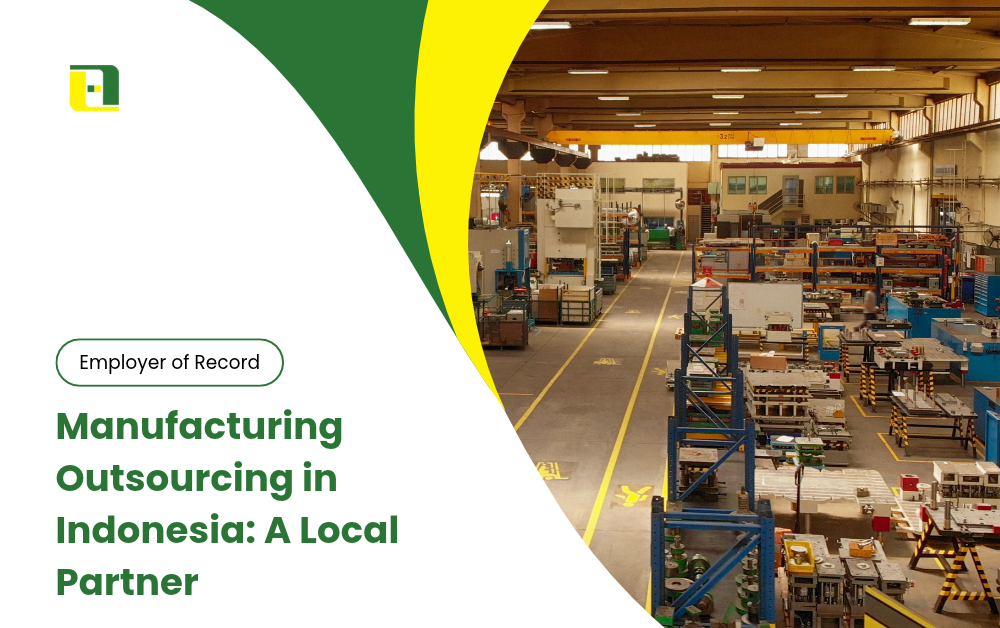
Manufacturing outsourcing is the practice of hiring a third-party manufacturer to produce goods or handle specific production processes instead of managing every manufacturing activity internally.
For companies exploring Indonesia, this approach can provide access to local production capabilities, suppliers, and workforce resources without requiring them to build every operational function from scratch. However, success depends on choosing a reliable manufacturing partner, managing quality and costs, and understanding local regulations.
This guide explains the key benefits and risks of manufacturing outsourcing in Indonesia and what international businesses should consider before entering the market.
What Is Manufacturing Outsourcing?
Manufacturing outsourcing occurs when a company contracts an external manufacturer to produce products, components, or subassemblies according to agreed specifications. The arrangement may cover an entire production process or selected activities, such as assembly, packaging, fabrication, or product finishing.
Common models include contract manufacturing, original equipment manufacturing (OEM), and outsourcing specific production stages. The appropriate model depends on product complexity, intellectual property requirements, production volume, and how much control the company wants to retain.
Unlike workforce outsourcing, which concerns the provision and management of workers, manufacturing outsourcing primarily focuses on production output, specifications, and delivery commitments. The distinction matters when evaluating contracts, responsibilities, and applicable regulations.
What Are the Benefits of Manufacturing Outsourcing?
Lower Upfront Investment and Operating Costs
Working with an established manufacturer can reduce the need to invest immediately in factory facilities, machinery, production systems, and specialized equipment. Companies can allocate more capital to product development, sales, and market expansion.
However, outsourcing does not automatically guarantee lower costs. Businesses should compare the complete cost of production, including tooling, shipping, quality inspections, duties where applicable, and supplier management.
Scalable Production Capacity
External manufacturing partners may provide access to production capacity that can be adjusted as demand changes. This can help businesses test a market, manage seasonal demand, or increase output without immediately expanding their own facilities.
Capacity should still be confirmed through production schedules, minimum order quantities, lead times, and contingency arrangements.
Access to Specialized Expertise
Experienced manufacturers may already have the machinery, technical personnel, production processes, and quality systems required for specific products. This can be especially valuable for companies entering an unfamiliar market or manufacturing category.
Greater Focus on Core Business Activities
By assigning selected production activities to an external partner, a company can concentrate on product design, branding, customer relationships, distribution, and commercial strategy. The company must still maintain appropriate oversight of product quality, intellectual property, and supplier performance.
What Are the Risks of Manufacturing Outsourcing?
Quality Control Issues
Production defects can affect customer satisfaction, delivery schedules, and brand reputation. Before signing a contract, companies should define product specifications, acceptable defect rates, inspection procedures, testing requirements, and corrective-action processes.
Intellectual Property Risks
Sharing designs, formulas, technical drawings, or proprietary processes with a third party creates confidentiality risks. Use appropriate confidentiality agreements, define ownership of tooling and production materials, and restrict access to sensitive information where practical.
Communication and Logistics Challenges
Differences in language, time zones, business practices, and documentation can complicate production coordination. Shipping delays, port congestion, and disruptions to raw-material supply can also affect delivery schedules.
Clear reporting procedures, agreed lead times, and backup plans can help reduce these risks.
Hidden Costs and Reduced Production Visibility
A low quoted unit price may exclude setup fees, packaging, inspections, storage, expedited shipping, or changes to product specifications. Companies should request an itemized quotation and establish how additional costs require approval.
Regular production reports, milestone tracking, and quality documentation can also help maintain visibility after production is outsourced.
Why Consider Indonesia for Manufacturing Outsourcing?
Manufacturing Ecosystem and Industrial Hubs
Indonesia has an established manufacturing base spanning food and beverages, textiles, automotive, chemicals, metals, electronics, and other processing industries. According to Statistics Indonesia (BPS), manufacturing accounted for 19.07% of Indonesia’s GDP in 2025, making it the largest contributor among economic sectors.
Manufacturing opportunities are distributed across different regions, with industrial estates and production clusters offering different combinations of suppliers, infrastructure, and workforce availability. Companies should evaluate locations based on their product requirements rather than assuming every industrial area supports the same capabilities.
Local Supplier Networks and Workforce Availability
A local manufacturing partner may help companies access domestic suppliers, production workers, technicians, and logistics providers. The suitability of these resources depends on the industry, required skills, production standards, and location.
Indonesia’s Role in Regional Supply Chains
Indonesia may be relevant for companies seeking to serve its domestic market or explore regional production and sourcing options. Businesses from Singapore and Australia, for example, may investigate Indonesian manufacturing opportunities as part of their broader regional strategies. The right approach depends on target customers, shipping costs, trade requirements, and supplier capabilities—not simply geographic proximity.
Infrastructure, Logistics, and Regulatory Considerations
Before committing to a location, assess transport links, utilities, industrial-estate facilities, access to ports, and the reliability of upstream suppliers. Companies should also review relevant business licensing, product standards, import and export requirements, environmental obligations, and workforce regulations.
How to Choose the Right Manufacturing Partner in Indonesia
Manufacturing Capabilities and Quality Assurance
Confirm that the manufacturer can meet your product specifications, production volumes, technical requirements, and quality standards. Request samples, review inspection processes, and clarify how defects will be handled.
Supplier Experience and Track Record
Review experience with comparable products, references where available, production capacity, and the ability to meet agreed delivery schedules. Site visits or independent assessments may provide additional confidence.
Cost Transparency and Logistics
Compare quotations using the same specifications and delivery terms. Clarify minimum order quantities, payment terms, packaging, shipping responsibilities, lead times, and potential additional charges.
Contract Terms and Intellectual Property Protection
Contracts should define specifications, ownership of designs and tooling, confidentiality, quality acceptance, delivery obligations, remedies for non-performance, and dispute resolution.
Regulatory Compliance and Operational Readiness
Check the manufacturer’s business credentials, applicable permits, safety practices, and relevant product or industry certifications. Companies should also establish clear points of contact and processes for managing changes, production issues, and audits.
For a broader overview of evaluating providers, see this guide to outsourcing companies in Indonesia.
What Does Indonesian Law Say About Workforce Outsourcing?
Manufacturing outsourcing and workforce outsourcing should not be treated as interchangeable arrangements. When a business engages an external party specifically to provide workers, Indonesia’s employment regulations become particularly relevant.
Minister of Manpower Regulation No. 7 of 2026 concerning Outsourced Work took effect on April 30, 2026. It addresses outsourced-work categories, written agreements, outsourcing-company obligations, and labor supervision. The regulation identifies supporting activities such as cleaning, food and beverage services, security, driver and worker transportation services, operational support, and supporting work in mining, oil and gas, and electricity.
Companies should not assume that every manufacturing production role automatically falls within these categories. The applicable treatment depends on the actual arrangement, work performed, and relevant legal requirements. Review the regulation and obtain qualified local advice when assessing a proposed workforce arrangement.
Businesses comparing service models can also read about HR outsourcing service providers and outsourcing professional services.
How Can Abhitech Support Workforce Outsourcing in Indonesia?
Selecting a manufacturing partner is one part of establishing operations in Indonesia. Companies that also need to recruit or manage employees may require support with local employment administration, payroll, onboarding, and workforce documentation.
Abhitech provides outsourcing and Employer of Record (EOR) services to support companies with workforce-related needs in Indonesia. These services address employment and HR administration; they are distinct from contract manufacturing itself. The appropriate service depends on the company’s operating structure, workforce requirements, and intended responsibilities.
To explore available options, visit Abhitech’s Employer of Record service page, browse the Abhitech blog for related guidance, or submit an inquiry through the Contact Us page.
Frequently Asked Questions
What is manufacturing outsourcing?
Manufacturing outsourcing is an arrangement in which a company hires an external manufacturer to produce goods, components, or selected parts of its production process.
What are the main types of manufacturing outsourcing?
Common models include contract manufacturing, OEM production, and outsourcing specific activities such as assembly, fabrication, packaging, or finishing.
What are the benefits and risks of manufacturing outsourcing?
Potential benefits include lower upfront investment, scalable capacity, and access to specialized expertise. Risks include quality problems, intellectual property exposure, logistics delays, hidden costs, and reduced production visibility.
Why consider Indonesia for manufacturing outsourcing?
Indonesia has a substantial manufacturing sector, established industrial clusters, domestic suppliers, and a workforce supporting a range of industries. Suitability depends on the product, location, logistics, and operational requirements.
What should companies check before choosing a manufacturing partner in Indonesia?
Assess technical capabilities, quality controls, track record, total costs, delivery capacity, contract terms, intellectual property protections, and regulatory readiness.
What should foreign companies know about workforce outsourcing regulations in Indonesia?
Companies should distinguish manufacturing contracts from arrangements involving the provision of workers. For workforce outsourcing, review the applicable provisions of Minister of Manpower Regulation No. 7 of 2026 and confirm that the proposed arrangement meets relevant requirements.